

Cora (43): "My son (11) wasn't allowed to go on the school trip because we hadn't paid the voluntary parental contribution"
A letter about camp
My son Tim is eleven years old and is in Year 5. A few weeks ago, he came home with a letter about the school trip. His class was going to spend three days at a residential camp in the spring, about an hour and a half's drive from school. They would sleep in bunk beds, go on a scavenger hunt in the woods, and sit around a campfire with the whole group in the evenings. Tim was excited right away. I was especially happy to see how much he was looking forward to it. At the time, I had no idea that in the end he would not be allowed to go at all.
He was looking forward to it
In the weeks that followed, the school camp came up regularly in conversation. The children had seen photos of the accommodation at school and were invited to suggest ideas for activities. Tim said there would probably be a nighttime game and that they would have to make their own beds. He found the latter especially funny, because at home he sometimes leaves his duvet hanging halfway onto the floor. He had agreed with his best friend that they would sleep next to each other. They were even already discussing what candy everyone would bring. It was clear that this would be one of the highlights of the school year for the children.
The voluntary contribution
At the beginning of the school year, we received a request through the parent portal to pay the voluntary parental contribution. It stated that the school used the money for additional activities, such as celebrations, outings, and the school camp. A specific amount was mentioned, and parents could pay via a payment link. I did not do so. That was a deliberate choice, and I did not feel I needed to provide any further explanation. After all, the letter clearly stated that the contribution was voluntary. I therefore assumed that not paying would have no consequences for Tim's participation in activities organized by the school.
An email reminder
In November, we received a reminder stating that the contribution had not yet been received and politely asking parents to pay it after all. I read the email and did nothing further. Later, there was another general message thanking the parents who had already paid. It said that the activities were only possible thanks to families’ contributions. Of course, I understood that outings cost money and that the school had to find the budget somewhere. But if you call a contribution voluntary, I believe parents should also be free not to pay it. Otherwise, in my view, it is no longer a voluntary contribution.
An unexpected phone call
On a Tuesday afternoon, I received a call from the school administration. The staff member told me they were finalizing the registrations for the camp and that Tim’s parental contribution was still outstanding. She asked whether I intended to pay it after all. I replied that we were not going to do so. There was a brief silence on the other end of the line. She then said she would pass this on to the school management, as it could potentially cause an issue with Tim’s participation. I asked what she meant by that. She said the principal would contact me about it.
I thought I had misunderstood
After that phone call, I was left with an uneasy feeling. I had not expected to be contacted personally about the payment, let alone to be told there might be an issue with the camp. I found the original letter and reread what it said. The word voluntary was definitely there. I also checked the school’s website, which explained that the parental contribution was intended for activities outside the regular curriculum. Nowhere did it say that children would not be allowed to participate if their parents did not pay. I told my husband about the phone call. He immediately thought it was strange and said that, as far as he knew, the school was not allowed to threaten exclusion at all.
A conversation with the director
Two days later, I received an invitation to come in. The principal wanted to discuss how we were going to arrange the school trip for Tim. I assumed he would ask whether we might still be willing to contribute and that we would then simply agree that Tim could go. But the conversation went very differently. The principal explained that the cost of the trip had increased and that the school did not have enough financial leeway to cover all the unpaid contributions. According to him, a line therefore had to be drawn. If we did not pay, Tim could not go.
So he wasn't allowed to come along
I asked whether I had understood him correctly. Did he really mean that my son had to stay home for three days while the rest of the class went on a school trip? The principal said he was sorry, but that the school could not simply cover the costs for every child. He explained that transportation, meals, and accommodation had to be paid for and that otherwise the budget would not balance. I replied that I fully understood that a school trip cost money, but that this did not change the voluntary nature of the contribution. The principal maintained that, in this case, participation was conditional on payment. I sat across from him, barely able to believe what I was hearing.
An alternative to school
According to the principal, Tim did not have to stay home on those days. He could simply come to school and would be placed with another group. Suitable work would be prepared for him, and he would remain under a teacher's supervision. He presented that as a reasonable solution. But to me, that actually only made things worse. Tim would spend three days among children who were not in his class, while his own friends were away at camp together. Then they would come back with stories, photos, and memories that he had not been part of. Surely you can't fix that by preparing a few worksheets?
A decision by adults
I asked the principal what Tim had done wrong. He looked at me in surprise and said that, of course, Tim had done nothing wrong. According to him, that was not the point at all. I said that, for me, that was precisely the point. My son had no control whatsoever over whether the parental contribution was paid. He did not even know that we had not paid it. Yet he would be the one to suffer the consequences. The principal said he understood my disappointment, but that parents also had a responsibility. I thought that was a strange line of reasoning, because in my view, you cannot turn a voluntary contribution into a mandatory one by taking something away from a child.
My husband became furious
When I got home and told my husband what had been said, he became extremely angry. He wanted to call the principal immediately and ask on what legal grounds Tim was being excluded. According to him, it was perfectly clear that this was not allowed. He grabbed his laptop and started looking up information about the voluntary parental contribution. Within a few minutes, he had found several pages stating that children may not be excluded from school activities if their parents do not pay. He showed me the texts and asked why I had not said during the meeting that the school was breaking the law. I told him that I had mainly been caught off guard.
He wanted to challenge it
My husband felt that we should file a formal complaint immediately. If the school stood by its decision, he was prepared to take the matter to the school board if necessary. He said it was not just about Tim, but also about other children who might be excluded for the same reason. In his view, someone needed to make it clear that a school could not simply make up its own rules. I understood his anger and agreed with him in principle. Still, I felt uneasy when he started talking about complaints and legal action. Not because I thought the school was right, but because Tim still had another year and a half left at this primary school.
He's only in Year 5
That made the situation complicated for me. If Tim had been in the final year of primary school and were due to start secondary school after the summer, I might have felt differently about it. But he is currently in the second-to-last year and still has to spend another full school year at this school next year. By then, the discussions about secondary education will also be getting closer. I know that school recommendations should be based on a child’s development and performance. Even so, I think it is important to maintain a good relationship with the teachers. I do not want tension to arise between us and the school when Tim still has to go there every day.
I didn't want an argument
My husband thought I was worrying far too much. He said that a professional school should never treat a child differently because their parents had filed a complaint. Of course, he was right about that. But there can sometimes be a difference between how things are officially supposed to work and how people actually interact in practice. Teachers are only human too, and I did not want us to become known as those difficult parents who made an issue out of everything. Up to that point, I had always had a very good relationship with the school. Tim felt comfortable there, and I wanted to keep it that way. So I suggested that we first have another calm conversation with the principal.
Tim didn't know anything yet
Meanwhile, Tim was still happily making plans for camp. Every time he brought it up, I felt uncomfortable. I knew a decision had already been made that meant he wasn’t allowed to go, but I didn’t want to tell him yet while we were trying to get it reversed. My husband thought we should be honest with him. I preferred to wait until we knew for sure. I thought it would be awful to upset him first, only to perhaps have to tell him later that everything had been sorted out after all.
The registration forms
A few days later, Tim came home with a form that parents had to sign for the camp. It included questions about allergies, medication use, and permission to take part in activities. He put it on the table and asked if I could fill it out that evening. I noticed that he had already written his name at the top. When I said I still needed to contact the school, he asked why. I told him that something needed to be arranged for the camp.
I had to tell
Eventually, I told him that the school had said he would not be allowed to go for the time being because we had not paid the voluntary parental contribution. At first, Tim did not understand. He asked whether we had forgotten to pay and whether I could not simply pay it after all. I explained that it was a voluntary contribution and that we had chosen not to pay it. He asked why the school was saying he was not allowed to go, then. I did not really have a good answer to that, other than that we believed the school was not entitled to make that decision and that we were discussing the matter with them.
His friends did go
That evening, he barely said anything at the dinner table. Later, he came over to me and asked whether his best friend Sem was going too. I said I assumed he was. Then he wanted to know if that meant he would be the only one left behind. I didn't know, but I couldn't reassure him either. He said everyone had been talking about camp for weeks and that he didn't want them to go without him. I could see that he was trying to hold back his tears. My husband sat down beside him and promised that we would do everything we could to sort it out.
An email with clear questions
The next morning, my husband emailed the principal. He asked for written confirmation that Tim was not allowed to participate because the voluntary parental contribution had not been paid. He also asked which school rule or legal provision the decision was based on. He referred to the Dutch government's information about voluntary parental contributions and wrote that children may not be excluded if their parents do not pay. I read the email before he sent it. It was businesslike and not impolite, but very clear. It made me feel uncomfortable. At the same time, I knew the questions were justified.
An answer that solved nothing
The principal responded two days later. He wrote that the school understood our concerns, but that the camp was only financially viable if parents paid their contribution. According to him, considerable effort had already been made to keep costs down, and it would be unfair to parents who had paid if others were allowed to participate without contributing. He suggested meeting with us again. He barely addressed the legal requirements. My husband found the response unacceptable and wanted to contact the school board immediately. I asked him to wait one more time. I hoped we could reach a solution without filing a formal complaint.
Then Tim came home crying
That afternoon, exactly what I had feared happened. Tim came out of school in tears and said that his friends now knew he might not be allowed to go. One boy had asked whether his parents perhaps could not afford the camp. Another had said it was unfair if Tim was allowed to go for free while everyone else had to pay. Tim had tried to explain that it was a voluntary contribution, but according to him, no one understood what he meant. He asked me why we did not just pay so that he could go like everyone else. I felt powerless. We had a dispute with the school over a rule, but Tim was the one who had to deal with it every day.
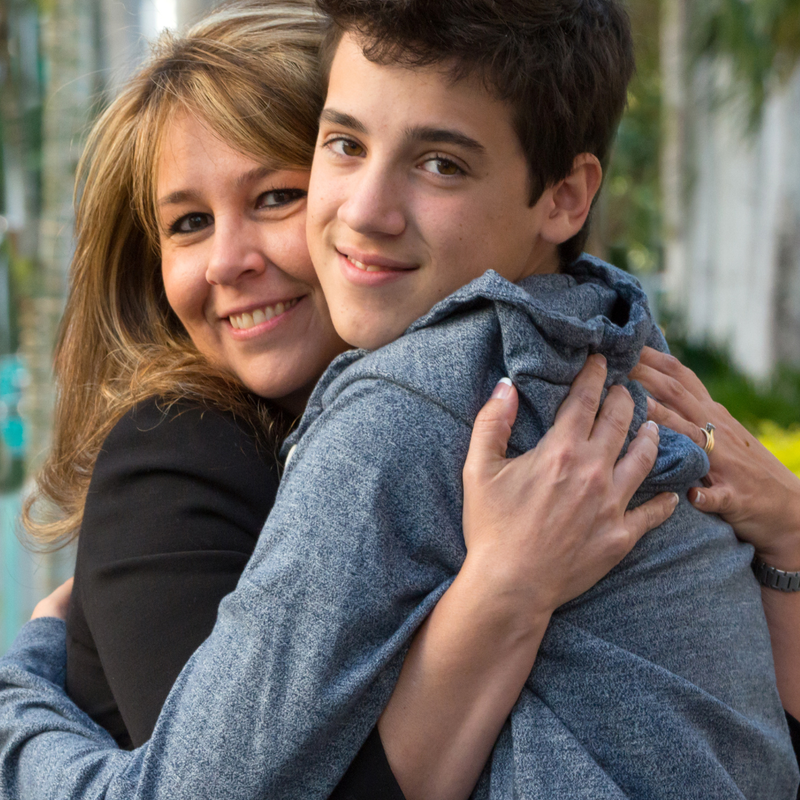
By then, they were talking about Tim
When Tim came home in tears that afternoon, I realized that the conflict had grown into something much bigger than a dispute over a parental contribution. My husband and I might have been completely convinced that we were in the right, but Tim still had to go back to school the next morning. He had to sit next to children who now knew that he might not be allowed to go on the school trip. I thought it was awful that he was being asked questions about a decision we had made as his parents. He had nothing at all to do with the payment, yet suddenly he had to defend himself to his classmates. I decided that I no longer wanted to wait for a solution that might somehow present itself.
A conversation with his master
Early the next morning, I asked the teacher if he had a moment after school. I wanted to know how the situation had been discussed in class and whether he had noticed that Tim was upset about it. The teacher told me that a few children had asked questions about the camp arrangements. He had said that not all registrations had been finalized yet and that parents sometimes still had things to sort out. According to him, he had never said that we had not paid. I believed him, but apparently the children had drawn their own conclusions. I told him that Tim was upset and that I did not want him to have to explain himself to his classmates.
He found it annoying too
According to the teacher, the camp was specifically intended to strengthen the bond between classmates. He therefore hoped that a solution could still be found. I asked whether he had any influence over the decision himself. He explained that the organization and finances were handled by the school administration. However, he was willing to discuss with the principal how upsetting the situation had become for Tim. That reassured me somewhat, although it did not change anything at that point.
My husband wanted to keep going
At home, I told my husband about the conversation. He was glad that the teacher had shown understanding, but he said that understanding alone was not enough. Tim should simply be allowed to go, and he wanted clarity on that. By then, he had gathered information about the rules concerning voluntary parental contributions. According to the Dutch government, primary schools are not allowed to exclude children from additional activities if their parents do not pay the voluntary contribution. This also applies to school trips and school camps. My husband felt that the principal had been reminded of this often enough by now. He therefore wanted to file a formal complaint with the school board.
A clear agreement
In the end, my husband and I agreed that he would contact the school board, but that we would remain professional in all our communications. No angry messages in the parents’ app, no arguments in the schoolyard, and no personal accusations against the teacher. We only wanted the school to apply the rules correctly and allow Tim to take part in the camp. My husband wrote a letter explaining the situation and referring to the relevant legal provisions. He asked the board to review the principal’s decision and ensure that Tim was not excluded. I read the letter carefully before he sent it. It felt like a big step, but also like something that had become necessary.
A response from the board
A few days later, we received an acknowledgment of receipt. The board wrote that it was taking the matter seriously and would discuss the situation with the school administration. It also stated that the rules regarding voluntary parental contributions were clear and that students could not be excluded because payment had not been made. My husband showed me the email and said that this was exactly what he had meant from the beginning. More than anything, I felt relieved. Not because I wanted to be proven right, but because someone finally seemed to be looking at the real issue. Could a school exclude a child from camp if their parents did not pay?
The director called again
That same week, the principal called me again. His tone was different from during our first conversation. He told me that the matter had been discussed with the school board and that the school had reviewed the situation. It had been determined that payment of the voluntary parental contribution could not, in fact, be made a condition for attending the camp. Tim was therefore allowed to go. I was incredibly relieved, but I did ask why this had not been made clear from the outset. The principal said that the school had been looking at it from a budgetary perspective. He admitted that the communication about it had not been handled well.
So it was possible after all
I asked how the school planned to resolve the financial issue. The principal said they would have to find room within the activities budget and that the school board would help explore funding options. He said the camp had to remain accessible to all students. I found it remarkable that they were suddenly looking for solutions, when they had previously stated so firmly that Tim could not go.
Tim couldn't believe it
When I told Tim that he was allowed to go after all, he looked at me happily. I told him that the school had changed its decision and that he could simply go with his classmates. When I showed him the confirmation, he started laughing. He immediately ran upstairs to call his friend Sem. I heard him say that he was going after all, so they could share a room together. It was such a normal reaction from a child who is incredibly excited about something. That was precisely what made me realize how much stress the past few weeks had caused him.
My husband was still angry
My husband was pleased with the outcome, but he still found it incomprehensible that we had had to go to so much trouble. In his view, the school should simply have known the rules. What he found particularly objectionable was that the principal had initially tried to enforce payment by excluding Tim. I understood his anger, but realized that I mainly just wanted to move on. I had no need for a written apology or an extensive discussion with other parents. What mattered most to me was that Tim could go and that the school had promised to change its policy.
Not everyone agreed
In the days that followed, I heard a range of reactions. Some parents thought it made sense that Tim was simply allowed to join in. Others felt that everyone who could afford to pay should do so, because otherwise the activities would become unaffordable. I understood that point of view, but I felt these were two separate issues. You can believe that parents should contribute to extra activities, but that does not mean a school should be allowed to exclude children when they do not. Besides, no one knew why others had or had not paid. I found it upsetting that so many assumptions were being made. After all, it was a voluntary contribution, not a bill we had forgotten to pay.
The preparations began
A few weeks before departure, we received a detailed packing list. Tim needed a sleeping bag, a pillow, old shoes, and warm clothes for the evening activities. He was also allowed to bring a flashlight and a small amount of spending money. We gathered his things together and bought him a new raincoat because his old one had become much too small.
Three carefree days
During the camp, we received a few photos through the parent portal. In the first photo, Tim was sitting with his friends at a large wooden table. In another, the children were walking through the woods on a scavenger hunt. He looked relaxed and had a big smile on his face. I was glad that he was simply part of the group. Of course, he would not have known what it was like if he had had to stay home. But I could easily imagine how painful it would have been to see those photos while he himself was in a different class. I was relieved that we had been able to prevent that.
He came home full of stories
When the bus returned on Friday afternoon, Tim got off with flushed cheeks and a bag that would barely close. He immediately started telling me about the nighttime game, the bunk beds, and a boy who had forgotten his toothbrush. According to him, they had hardly slept because everyone kept talking. He had also helped set up breakfast and had gotten lost with his group during the scavenger hunt. I listened to his stories and thought about how close we had come to making him miss all of this.
I see school differently
Since this situation, I have come to see the relationship between parents and the school differently. I had always assumed that the rules concerning voluntary parental contributions were clear-cut and that schools handled them responsibly. Now I have learned that even school administrators can make a decision that later turns out not to be permitted. That does not mean I no longer trust the teachers. Tim still enjoys school, and his teacher works incredibly hard for the class. But I have learned that, as a parent, you sometimes have to find out for yourself what your rights are—even when you have no desire to get into a conflict.
One more year to go
Tim is still in Year 7, and next year he will begin his final year of primary school. That is when the discussions about secondary education will take place, ultimately leading to the final school recommendation. I hope we can simply get through that period with the school in a positive way. I want Tim to be assessed based on who he is, how he is developing, and what he is capable of—not on a dispute his parents had with the school administration.
It should never have come to this
The moment Tim asked why he was the only one who was not allowed to go was awful. He did not understand why a decision made by his parents meant that he had to miss out on something he had been looking forward to for weeks. In my opinion, that should never have happened. A school trip is more than just a few days away. It is an experience that children share and often continue talking about for a long time afterward. That is precisely why I believe a child should not be excluded because of a voluntary payment. Fortunately, Tim was ultimately allowed to go after all. But I still find it strange that we first had to confront the school over it.